 View full size ↗
 View full size ↗
 View full size ↗
Housing programs. Immigration legal services. Behavioral health intensive case management. Reentry. Senior services. Workforce development. Foster care. The work is different in every program — but the bones of case management are the same. ClearWind.AI got the bones right.
In many human services nonprofits, case managers work across a fragmented stack — the intake form in one tool, case notes in another, service logs in a third because the funder requires a specific format, the referral pipeline in a spreadsheet, the outcomes tracker in another. The funder report at the end of the quarter often requires re-typing data from all of them.
None of that work moves the mission forward. It's the cost of running a program in software that was never designed for the program.
ClearWind.AI was built around the actual rhythm of case management — the intake, the service plan, the notes from the visit, the service log, the closure, the report — and made all of it draw from the same record. The case manager works in one place. The data shows up in the funder report because it was already where the funder report needed it.
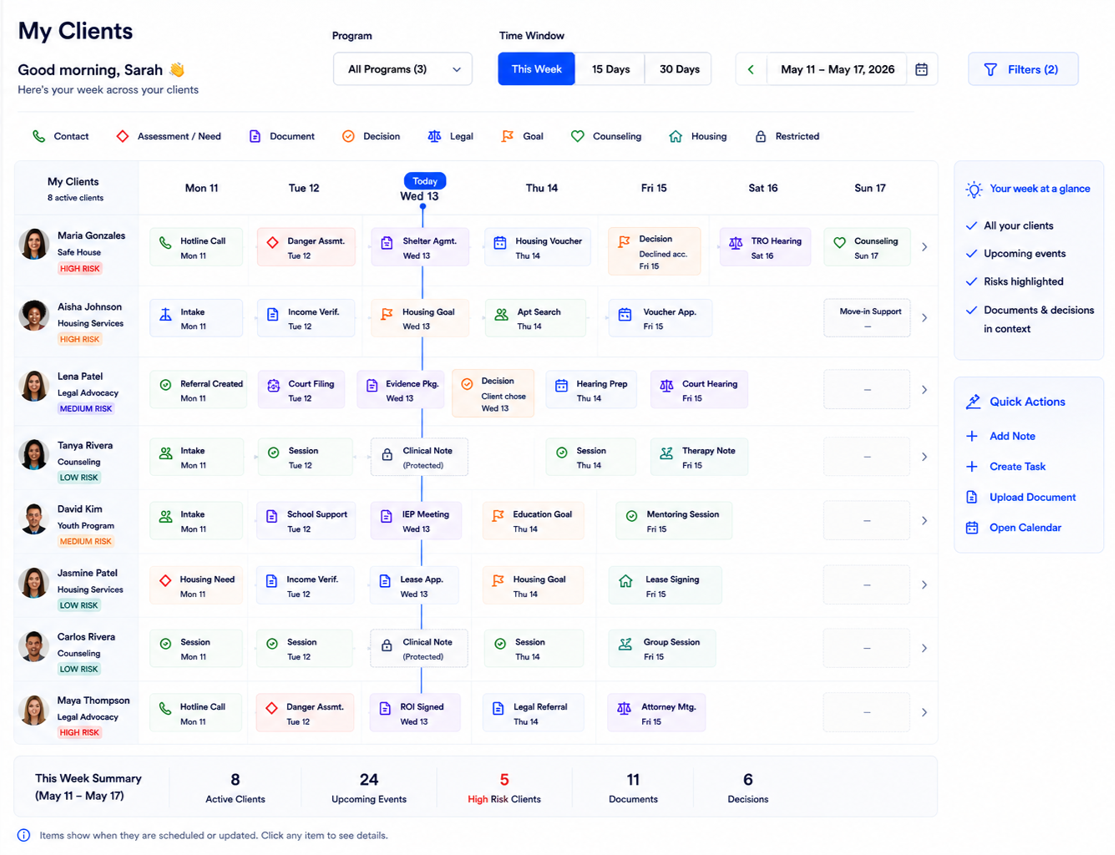
View full size ↗View full size ↗View full size ↗Alex, your housing case manager, opens the queue. The cases that need attention this week are at the top — not because Alex sorted them, but because the system already knows: a follow-up appointment that hasn't been scheduled, a service plan goal that's behind, a benefit that hasn't been used in two months, a participant whose case anniversary is approaching and triggers a renewal review.
Alex picks up the first case and dictates the notes from yesterday's home visit. The recording becomes a draft case note — the structured kind your funder asks for, with the right contact method, the right service code, the right links to the goals on the service plan. Alex reads through the draft, makes a few edits, and saves. The details are still fresh, and Alex retains control of the record.
The case is part of a HUD program with a quarterly outcome report due in three weeks. The data is already there because Alex has been working in the system every day. When the outcomes manager runs the report, the indicator counts come from the actual service activity, the demographic breakdowns come from the actual intakes, and the narrative draft is grounded in the program's real work — not invented at 11pm the night before submission.
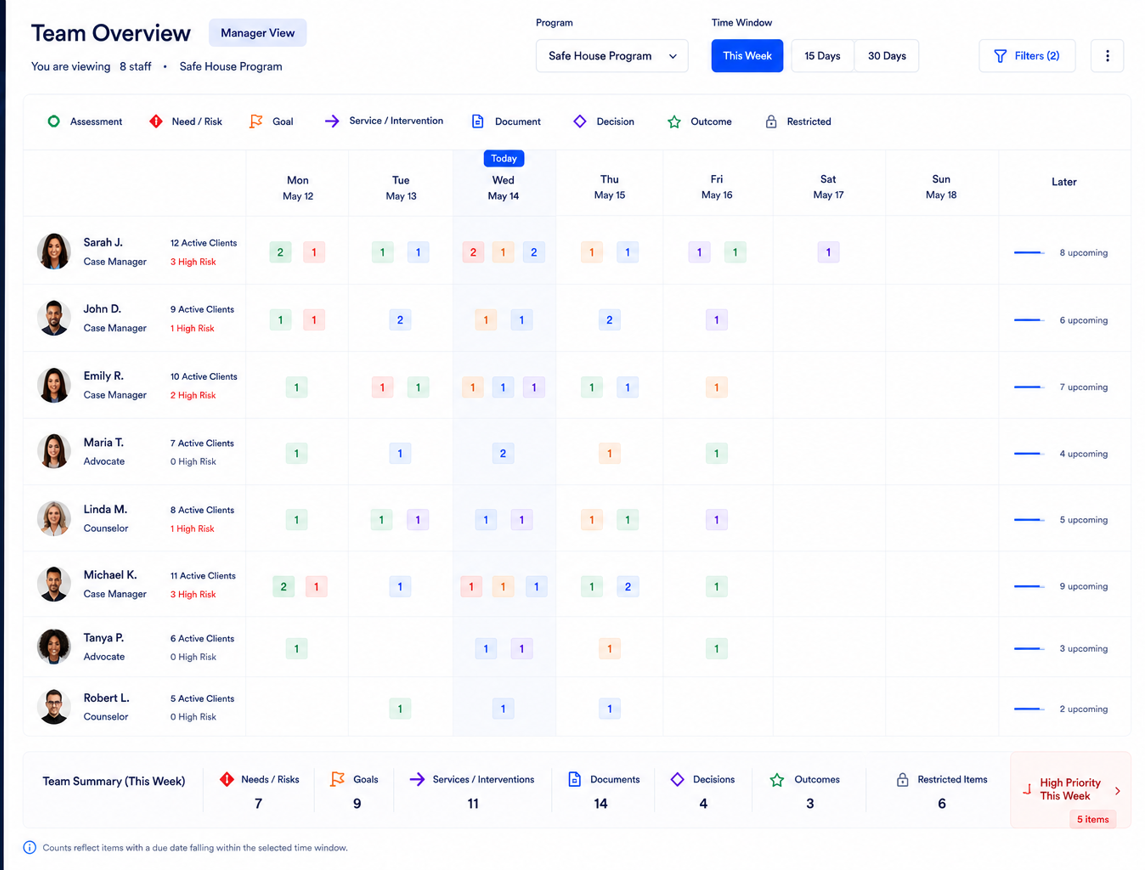
Down the hall, the supervisor is reviewing flagged cases. One participant hasn't engaged with services in three weeks; the system surfaced that. Another's service plan is missing a required signature; the system flagged that too. The supervisor doesn't have to remember to check. The platform reminds her, and she gets to spend the morning on the things that need her judgment instead of the things that needed her vigilance.
This is what we mean by "the bones of case management." Get them right and the rest of the work gets easier.
Not a feature list — a working environment that case managers actually want to use. Below is what the module does, grouped by the parts of the work where it shows up.
Build the intake form your program actually needs. Conditional logic so the form changes based on the answers — if the participant is a veteran, ask the veteran-specific questions; if they have children, capture the family composition. Eligibility rules run automatically. Documentation requirements track themselves. Participants who don't qualify get referred out — to the right partner, with their consent, with a warm handoff.
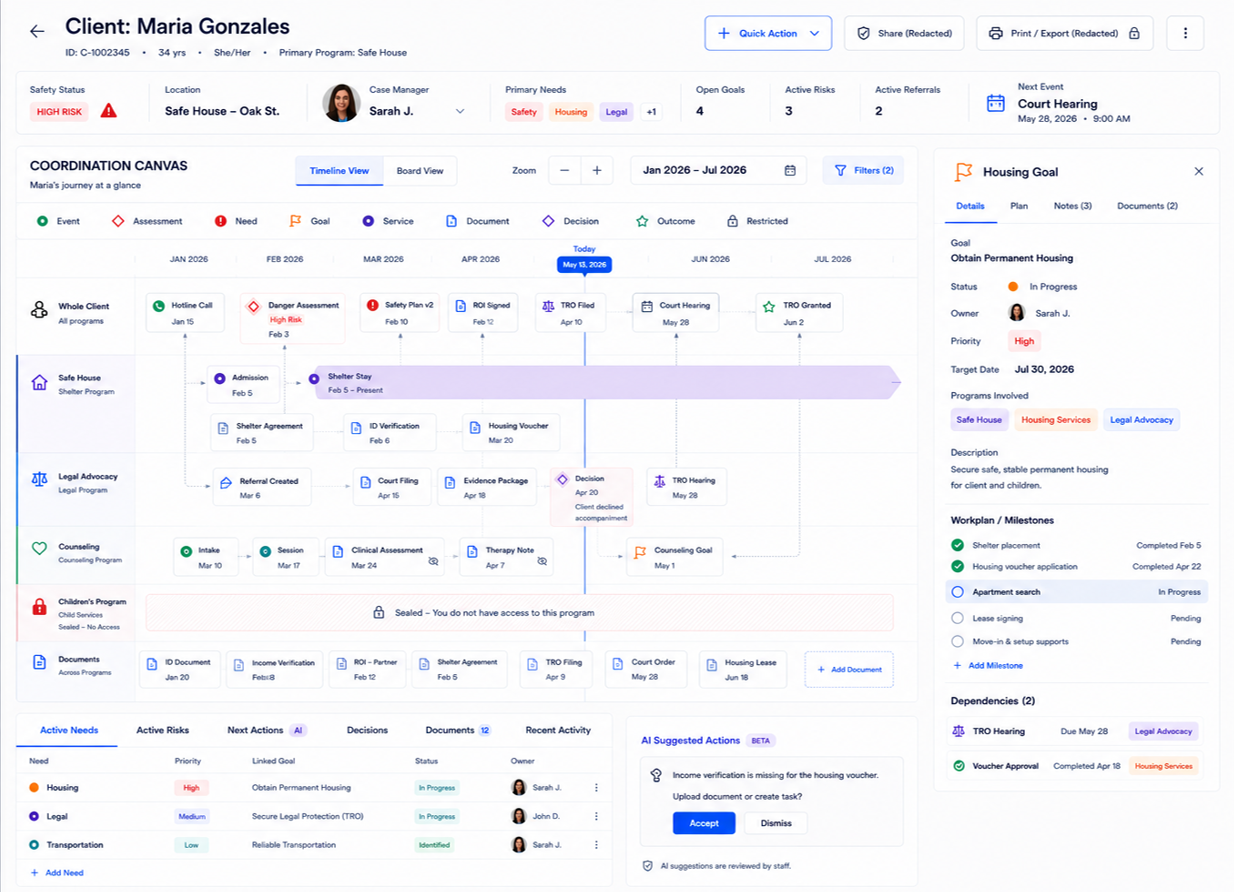
Co-create a service plan with the participant. Set goals with target dates and the activities that will get there. Plans show up in the participant's record, in the case manager's queue, and in the supervisor's review. Progress on each goal updates as services are delivered. When a participant closes successfully, the outcomes attached to those goals flow into your funder report without anyone having to copy them.
Structured note formats for whatever your funder or accreditation body requires — SOAP, DAP, BIRP, narrative, your own. Voice-to-note for case managers who'd rather talk than type. Notes link automatically to the service plan, the activity log, the participant's history. Co-signing workflow for programs where a supervisor needs to sign off. Searchable across the whole caseload when you need to find that one conversation from six months ago.
Log services as they happen — individually, in batch for groups, or via mobile when the case manager is in the field. Each service connects to the right grant or funding stream automatically, so service hours roll up to the right report. No second pass to reconcile billing or units. No spreadsheet at the end of the month.
A directory of partner organizations with the services they offer, the populations they serve, the eligibility they require. Submit a referral with the participant's consent and the relevant case context. Track whether the partner accepted, what services they delivered, and how it ended. The participant's full picture stays with you even as care moves across organizations.
Close cases with a structured exit interview that captures what worked and what didn't. Outcomes attached to service-plan goals are validated at closure. Participant satisfaction surveys can fire automatically. The case stays in the record forever — so if the same person comes back two years later, your case manager doesn't start from scratch.
Pre-built templates for the major federal sources — HUD, HRSA, SAMHSA, OVW, VOCA, ACF — and the ability to build your own for state, local, and foundation funders. The data was already there because the case managers were working in the system. The narrative drafts itself from the program's actual activity. The report goes out on time, with numbers you can defend.
A real-time picture of the caseloads under each supervisor. Flagged cases — overdue follow-ups, missing signatures, stalled service plans, participants who've gone quiet — surface without anyone having to remember to check. Workload distribution is visible at a glance. New case managers can be paired with mentors and the supervisor can see their work alongside the experienced staff.
The AI in ClearWind.AI's case management module exists to take the parts of the work that nobody became a case manager to do — the typing, the searching, the formatting, the report writing — and let your team focus on the relationships and the judgment calls that no software should ever automate.
Voice-to-note. Speak the visit summary as you walk back to the car; structured case notes are waiting for you when you sit down. Edit before commit. AI checks the draft against your configured note standard and guides completion. The social worker reviews and approves the result.
Disengagement detection. The system notices when a participant who used to engage stops responding. Surfaces it in the case manager's queue without waiting for the next scheduled check-in. Catches the people who would have been forgotten.
Funder report drafts. The first pass at the narrative — built from the actual service activity, not made up — saves the development director or program manager hours per report. Your voice, your judgment, just faster.
Plain-English search. "Show me participants enrolled in the workforce program last quarter who completed at least one credentialing milestone." Get the answer and the chart, without writing a query or asking the data person.
Across all of it, the AI respects the privacy obligations the rest of the platform respects. Sensitive information stays inside your tenant. Your compliance team can audit which AI requests touched which information, every time.
ClearWind.AI's case management is the universal module — built to handle the structure that programs typically share while bending to the specifics of your work. Organizations that run their programs on this module include:
If your work involves taking someone in, building a plan with them, delivering services over time, and reporting on the outcome to a funder — this is the module for you.
If your work is specifically domestic violence and intimate partner violence advocacy, see DV Case Management — a separate module designed around the trauma-informed practices, danger assessment, safety planning, and confidentiality requirements that make DV work different.
Switching from legacy software? Our AI-assisted migration is often free. We confirm scope and any cost before you commit. Learn about Migration →